
Wine lovers visit vineyards for more than just drinks; they seek a complete, memorable experience. Many vineyard owners are discovering that adding a mini golf vineyard attraction extends guest visits and generates new revenue streams.
Mini golf appeals to families, groups of friends, and tourists who want an activity that complements wine tastings and tours. It adds energy, fun, and interaction to a relaxed setting and helps a vineyard stand out in a competitive market.
Why Vineyards Are Looking Beyond Tastings
A vineyard offers natural beauty, rich history, and exceptional wine. These factors draw visitors, yet many guests want more than a glass of wine.
Modern vineyard experiences often include weddings, concerts, and food trucks. However, interactive recreation introduces an entirely new layer of engagement.
Mini golf integrates seamlessly into this mix. It enhances the visit without competing with the tasting room. Families with children can enjoy entertainment while adults sip wine. Couples can pair a round of golf with wine for a unique date night. Tourists appreciate a lighthearted activity to enjoy before leaving.
Adding a mini golf vineyard encourages longer visits and creates shared experiences that visitors remember.
The Benefits of a Mini Golf Vineyard Attraction
Adding a mini golf course provides more than a simple diversion. It reshapes visitor interaction with the property and strengthens overall business growth.
- Increase in foot traffic
Mini golf attracts a broader and more diverse audience. Guests who might not have initially planned a wine tasting can stop for a round of golf and then explore the vineyard’s other offerings. Families with children, groups of friends, and tourists all discover additional reasons to visit.
The increased foot traffic not only boosts immediate engagement but also helps establish long-term customer connections and repeat visits.
- A steady stream of revenue
Charging a small fee per round generates consistent income that complements traditional tasting sales. While wine sales may fluctuate depending on weekends, seasons, or special events, mini golf encourages visitors throughout the week.
This steady activity balances revenue streams and strengthens overall financial stability. Over time, it supports sustainable growth and allows the vineyard to invest in new experiences or improvements without relying solely on beverage sales.
- Stronger brand identity
Mini golf turns a vineyard into a destination rather than a stop. Guests remember laughter, activity, and a setting that feels distinct from other wineries. These experiences spark word-of-mouth recommendations and social media sharing, extending reach without added advertising.
Design That Matches Vineyard Character
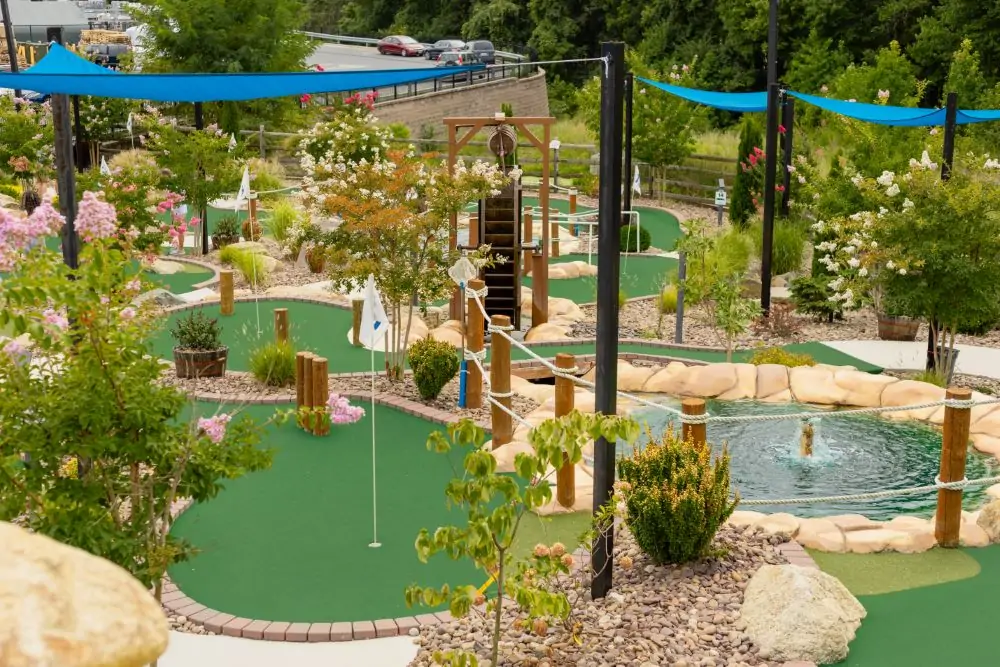
Mini golf does not need to resemble a roadside attraction. Thoughtful design allows the course to complement the vineyard. Wine-themed holes, such as bottle or corkscrew shapes, create a direct link between the game and vineyard identity.
Additional features can highlight the property’s history or natural surroundings. Incorporating stone walls, oak trees, or vineyard initials fosters a sense of place. The course feels intentional and integrated, not like an afterthought, which enhances the overall guest experience at the mini golf vineyard.
How Mini Golf Encourages Longer Visits
Extending average guest visits is often a challenge. Tastings may last only an hour, yet mini golf encourages lingering. Parents can alternate turns while others relax with food and drinks. Groups can use the course as a social activity that pairs naturally with wine enjoyment.
Longer visits often translate to higher sales. Guests who stay longer usually purchase more beverages, snacks, or bottles to take home. Hosting events like golf tournaments or themed evenings with live music provides multiple incentives for return visits.
Low Maintenance, High Value
Vineyard owners sometimes hesitate to add attractions due to maintenance concerns. A well-designed mini golf course requires minimal upkeep. Durable materials withstand weather and frequent use, and routine care typically involves clearing leaves or light debris.
Unlike mechanical rides, mini golf does not demand specialized staff or complex systems. Once installed, it becomes a reliable asset and generates income with minimal effort. For vineyards already managing production and service, this balance makes a substantial difference.
Flexible Options For Vineyard Spaces
Not every vineyard has the same amount of land available. Fortunately, mini golf can adapt. Some vineyards choose a nine-hole layout that fits neatly into a picnic or garden area. Others go for a full eighteen-hole course that serves as a central attraction.
Indoors, mini golf can still work. With creative indoor mini golf course design, owners can turn existing spaces into playable, themed environments that draw crowds year-round. This option works well for vineyards in colder climates where outdoor activities slow down in winter.
How to Get Started With Mini Golf on Vineyard Land
The process begins with assessing the space. A clear, level area works best, but a skilled builder can shape a course around natural features such as trees or slopes. The next step is to decide on the type of course. Some vineyards prefer a simple, classic design. Others choose more complex courses that feature unique obstacles and themes.
The final stage is construction. With the right team, building a mini golf course is smooth. Timelines can be efficient, and the transition from empty space to playable course can happen faster than many owners expect.
Once complete, the course becomes an attraction that can operate for decades.
Mini Golf as a Long-Term Investment
The upfront cost of mini golf construction is outweighed by long-term returns. The course drives additional revenue from play fees but also from increased sales of wine, food, and merchandise. Its durability and low maintenance mean it continues to earn with minimal additional expense.
Unlike temporary trends, mini golf appeals to all ages and remains popular year after year. Its intergenerational reach makes it unique. Children, parents, and grandparents can all play together. That universality builds loyalty and repeat visits that sustain the vineyard business well into the future.
Ready to Reimagine Your Vineyard Experience?
At Harris Miniature Golf Courses, Inc, we specialize in designing and constructing mini golf courses that bring fresh energy to vineyards. We listen to your vision, craft layouts that reflect your land, and build courses that encourage guests to stay longer and return often.
Let us help you turn your vineyard space into a lasting experience guests will love. Contact us today.
